Aarumi

Aarumi

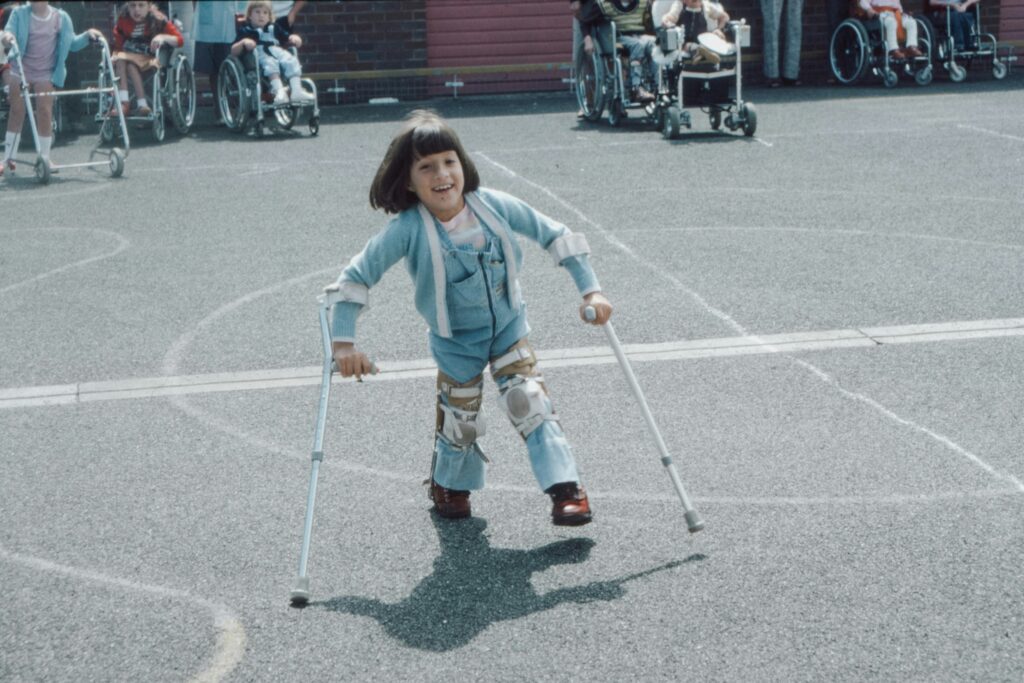
ortopediatri cocuk ortopedi akademisi ueceyq43xhi unsplash

Toilet Training and Self-Care Skills for Special Needs Children in Bangalore: Building Dignity, Independence, and Confidence

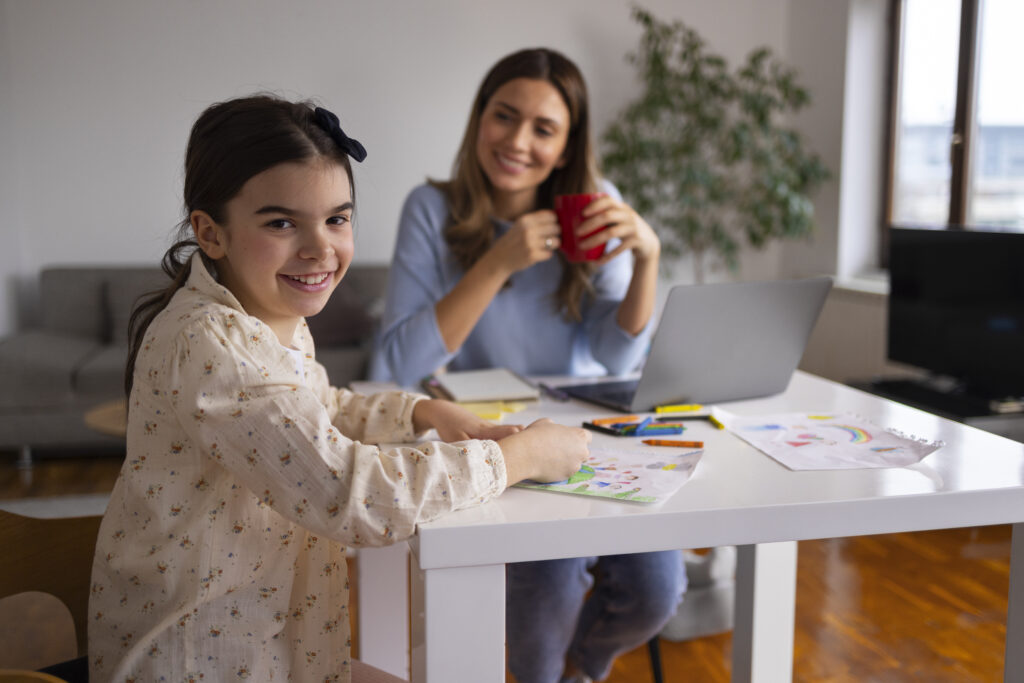
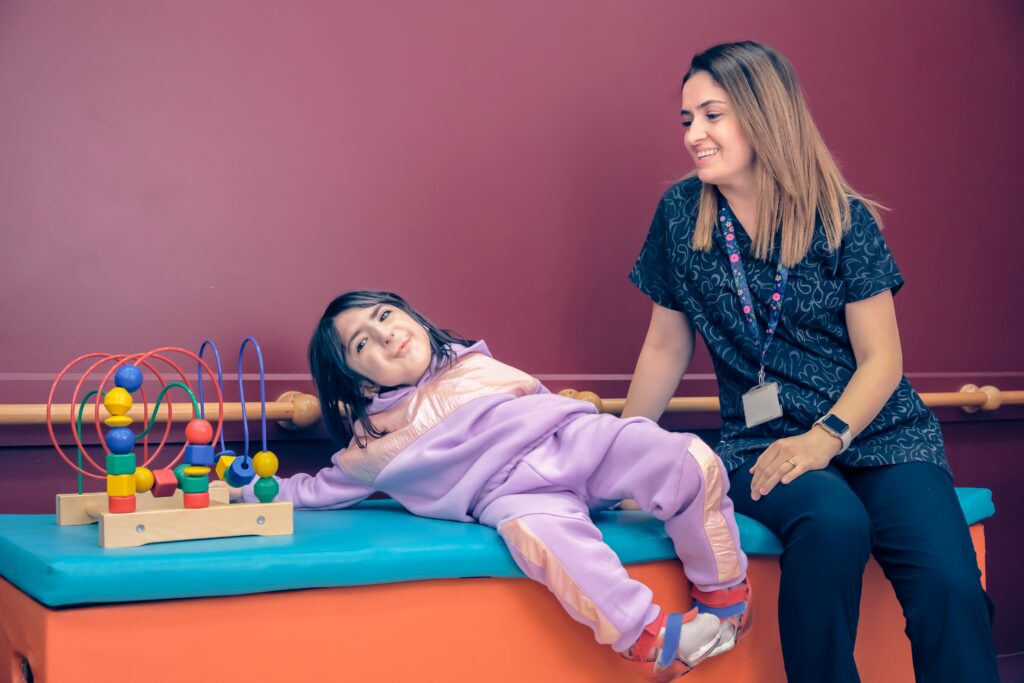
For most families, toilet training is a significant milestone that comes with its fair share of patience, setbacks, and eventual celebration. For families of children with special needs, this milestone can feel far more complex, more prolonged, and at times genuinely overwhelming. The same is true for many other self-care skills, from washing hands and brushing teeth to dressing independently and managing personal hygiene. These skills are not always easy to teach, and they are not always easy to learn. But they matter enormously, because they are the foundation of personal dignity, daily independence, and a child’s growing sense of capability and self-worth. Toilet training and self-care skills support for special needs children in Bangalore is helping families across the city navigate these challenges with the right guidance, the right strategies, and the right support at every step. At Aarumi in Bengaluru, self-care skill development is a central part of our occupational therapy and life skills programmes, because we know that the ability to care for oneself independently is one of the most meaningful contributions therapy can make to a child’s long-term quality of life. Why Self-Care Skills Can Be Challenging for Children With Special Needs Self-care skills that typically developing children acquire relatively naturally can present significant challenges for children with special needs for a range of reasons. Understanding why these challenges exist is the first step towards addressing them effectively. Common reasons why self-care skills are more difficult for children with special needs include: Understanding the specific reasons behind a child’s self-care difficulties allows therapists and families to design support strategies that address the root causes rather than just the surface behaviours. Toilet Training for Children With Special Needs Toilet training is often one of the most emotionally charged aspects of self-care skill development for families of children with special needs. Many children with autism, intellectual disabilities, sensory processing disorder, and other developmental conditions are significantly delayed in achieving toilet independence, and the process of getting there requires a level of patience, consistency, and strategic thinking that goes well beyond the standard approaches used with typically developing children. Effective toilet training for children with special needs typically involves: At Aarumi, toilet training support is delivered with sensitivity, practicality, and a deep understanding of the unique challenges involved. We work closely with families to develop individualised toilet training plans that are realistic, consistent, and built around each child’s specific needs and profile. To learn more about our self-care and life skills support, visit our programmes page. Dressing and Clothing Management Dressing independently is another self-care skill that can present significant challenges for children with special needs. Sensory sensitivities around clothing textures, tags, and fastenings, combined with the motor demands of buttons, zips, and laces and the cognitive demand of sequencing a multi-step routine, can make getting dressed a source of daily stress for both child and family. Occupational therapy support for dressing skills typically focuses on: Personal Hygiene and Grooming Personal hygiene skills including handwashing, teeth brushing, face washing, hair care, and bathing are essential for health, social acceptance, and personal dignity. For children with special needs, each of these tasks presents its own set of sensory, motor, and cognitive challenges. Effective hygiene skill support typically involves: Eating and Mealtime Independence Mealtime skills, including using cutlery, managing different food textures, sitting at the table for an appropriate duration, and eventually preparing simple foods independently, are an important dimension of self-care development for children with special needs. Many children with special needs have significant mealtime challenges related to sensory sensitivities around food textures, temperatures, and smells, motor difficulties with cutlery use, or behavioural challenges around the social demands of mealtimes. Occupational therapy and feeding therapy address these challenges in a structured, sensitive way that respects the child’s pace and builds positive associations with mealtimes over time. The Role of Visual Supports in Self-Care Skill Development One of the most consistently effective strategies for supporting self-care skill development in children with special needs is the use of visual supports. Visual schedules, step-by-step picture sequences, and visual timers help children understand what is expected, what comes next, and how long a task will take, reducing anxiety and supporting independent completion of self-care routines. At Aarumi, we create personalised visual support materials for every child we work with, making sure these tools are practical, clear, and tailored to the specific self-care routines being targeted. We also help families understand how to use these tools consistently at home to maximise their effectiveness. To learn more about how we work with families, visit our About page. The Importance of Consistency Across Home and Therapy Self-care skills are learned through repetition and consistency. A skill practised only during therapy sessions will not generalise effectively to real-life settings. For self-care skills to truly stick, they need to be practised consistently in the environments where they will actually be used, primarily at home, using the same routines, the same supports, and the same strategies that are being used in therapy. This is why parent involvement and home practice guidance are such an essential part of our self-care skill development work at Aarumi. We do not just work with the child in the therapy room and send them home. We work with the whole family, equipping parents with the knowledge, confidence, and practical strategies they need to support their child’s self-care development every single day. Every Step Towards Independence Matters The first time a child washes their own hands without being prompted. The first time they dress themselves from start to finish. The first time they use the toilet independently without assistance. These moments might seem small to someone on the outside, but for the child and for their family, they are extraordinary. They represent hard work, persistence, and a growing belief that independence is possible. At Aarumi, we have had the privilege of witnessing these moments many times, and we never take them for granted. Every step towards independence, however small, is a step towards a life

Toilet Training and Self-Care Skills for Special Needs Children in Bangalore: Building Dignity, Independence, and Confidence Read More »

Fine Motor Skills Development for Special Needs Children in Bangalore: Building the Small Movements That Make a Big Difference

When we think about a child’s development, we often focus on the big milestones. First steps. First words. First day of school. But alongside these visible achievements, a quieter and equally important set of skills is developing all the time. The ability to hold a pencil. To button a shirt. To pick up a small object, turn a page, or use a pair of scissors. These are fine motor skills, and for children with special needs, developing them is one of the most practical and impactful areas of therapeutic support available. Fine motor skills development for special needs children in Bangalore is helping families across the city give their children the physical foundation they need to access education, manage daily routines, and build the independence that shapes quality of life for years to come. At Aarumi in Bengaluru, fine motor skill development is an important part of our occupational therapy and developmental support programmes, because we know that the ability to use hands and fingers effectively touches almost every area of a child’s daily life. What Are Fine Motor Skills? Fine motor skills refer to the coordinated use of the small muscles in the hands, fingers, and wrists, working together with the eyes to perform precise, controlled movements. They are distinct from gross motor skills, which involve larger muscle groups and whole-body movements like walking, jumping, and climbing. Fine motor skills underpin a huge range of everyday tasks including: When fine motor skills are delayed or underdeveloped, these everyday tasks become significantly more difficult, affecting a child’s independence, their access to learning, and often their confidence and self-esteem as well. Who Benefits From Fine Motor Skills Support? Fine motor skill delays are common across a wide range of developmental conditions, including: Children do not always need a formal diagnosis to benefit from fine motor skills support. If a parent notices that their child is struggling with age-appropriate hand tasks or avoiding activities that require precise hand use, an occupational therapy assessment can provide valuable insight and practical direction. Why Fine Motor Skills Matter for School Readiness Fine motor skills and school readiness are deeply connected. The demands of a classroom environment, from holding a pencil and forming letters to cutting along lines, using art materials, and managing a school bag, all require well-developed fine motor control. Children who enter school with underdeveloped fine motor skills often struggle to keep up with classroom tasks, which can affect their academic progress, their confidence, and their enjoyment of school. Early fine motor skills support gives children the best possible foundation for a positive school experience from the very beginning. At Aarumi, school readiness preparation is an important part of our developmental support work, and fine motor skills development sits right at the heart of it. To learn more about our school readiness and occupational therapy programmes, visit our programmes page. How Fine Motor Skills Are Developed Through Therapy Fine motor skills development in therapy is always play-based, purposeful, and tailored to the individual child. A skilled occupational therapist assesses the child’s current fine motor abilities and identifies the specific areas where targeted support will make the most difference. Therapy activities designed to build fine motor skills include: Every activity is chosen to target specific fine motor goals while keeping the child engaged, motivated, and enjoying the process. The Connection Between Fine Motor Skills and Sensory Processing Fine motor development and sensory processing are closely linked. Many children with fine motor difficulties also have sensory processing differences that affect how they experience touch, pressure, and proprioceptive input in their hands and fingers. A child who is hypersensitive to touch may avoid handling certain textures or materials, which limits the range of activities available for fine motor practice. A child who is hyposensitive may not receive accurate feedback from their hands about how much pressure they are applying, making precise movements more difficult to control. Addressing sensory processing alongside fine motor development often produces significantly better outcomes, because the child’s sensory system is better able to support and guide the motor learning taking place. At Aarumi, our occupational therapists take a holistic view of each child’s sensory and motor profile, addressing both dimensions together for the most effective results. Building Fine Motor Skills at Home Fine motor skills develop through repetition and practice, which means that what happens at home between therapy sessions is just as important as the sessions themselves. The good news is that many everyday activities provide excellent opportunities for fine motor practice without needing any special equipment or dedicated practice time. Simple activities that build fine motor skills at home include: At Aarumi, we provide families with personalised home activity suggestions that target their child’s specific fine motor goals, making it easy to build meaningful practice into everyday routines. To learn more about how we partner with families in our work, visit our About page. Small Skills, Big Impact It might seem like a small thing to be able to button your own shirt, hold your own pencil, or cut along a line independently. But for a child who has worked hard to develop these abilities, these achievements represent something far more significant than the task itself. They represent capability. Independence. The knowledge that with effort and support, difficult things can be mastered. Every fine motor milestone a child reaches opens up a little more of the world to them. And that, ultimately, is what all of our work at Aarumi is about: opening the world up, one skill at a time, for every child we have the privilege of supporting. If you would like to explore fine motor skills development support for your child in Bangalore, reach out to our team at Aarumi today. We are here to help your child build the skills they need to thrive in school, at home, and in life.

Fine Motor Skills Development for Special Needs Children in Bangalore: Building the Small Movements That Make a Big Difference Read More »

gifts for birthday

Assistive Technology and Communication Aids for Special Needs Children in Bangalore: Opening New Doors to Expression and Independence

Every child has something to say. Every child has thoughts, feelings, needs, and ideas that deserve to be heard and understood. For children with special needs who find verbal communication difficult or impossible, assistive technology and communication aids are not just helpful tools. They are transformative, life-changing bridges between a child’s inner world and the people around them. Assistive technology and communication aids for special needs children in Bangalore are helping families across the city discover new ways for their children to express themselves, access learning, and participate more fully in daily life. The technology available today is more powerful, more accessible, and more child-friendly than ever before, and the difference it can make to a child’s quality of life is genuinely remarkable. At Aarumi in Bengaluru, we are passionate about connecting children and families with the right tools and technologies to support communication, learning, and independence, because we know that when a child finds their voice, everything changes. What Is Assistive Technology? Assistive technology refers to any device, tool, software, or system that helps a person with a disability perform tasks that might otherwise be difficult or impossible. In the context of children with special needs, assistive technology covers an enormous range of tools, from simple low-tech solutions like picture cards and communication boards to sophisticated high-tech devices like speech-generating tablets and eye-gaze communication systems. The goal of assistive technology is always to maximise a child’s independence, participation, and quality of life by removing or reducing barriers that their disability creates. Assistive technology for special needs children can support: Augmentative and Alternative Communication One of the most significant areas of assistive technology for children with special needs is augmentative and alternative communication, widely known as AAC. AAC refers to all the methods and tools used to support or replace verbal speech for individuals who cannot rely on spoken language alone to communicate effectively. AAC is not a last resort. It is not something to try only after all other options have been exhausted. Research consistently shows that AAC does not inhibit the development of verbal speech. In fact, it often supports and accelerates it, because it reduces the communication frustration that can otherwise become a significant barrier to language development. AAC tools range from low-tech to high-tech and include: At Aarumi, AAC assessment and implementation is an important part of our communication support work. We help families identify the right AAC system for their child, introduce it effectively, and build competence and confidence in its use over time. To learn more about our communication support programmes, visit our programmes page. Low-Tech Communication Aids Not every child needs a high-tech device to communicate more effectively. Many children make remarkable progress with well-designed low-tech communication tools that are simple, durable, portable, and available at relatively low cost. Low-tech communication aids include: These tools are often the most practical starting point for younger children or those who are newer to AAC, and they can be highly effective when introduced well and used consistently across home, school, and therapy settings. High-Tech Communication Devices For children who need more powerful communication support, high-tech devices offer extraordinary possibilities. Modern speech-generating devices and AAC apps can give a child access to thousands of words and phrases, organised in intuitive ways that allow increasingly sophisticated and spontaneous communication over time. Many of these devices are tablet-based, meaning they are familiar in form to children who have grown up with technology, and they can be highly motivating to use. With the right assessment, the right vocabulary setup, and consistent support from therapists, educators, and families, high-tech AAC can genuinely transform a child’s communicative life. For children with physical disabilities that prevent them from using a touchscreen effectively, switch access, head tracking, and eye-gaze technology offer alternative access methods that open up AAC to children who might otherwise be excluded from these tools entirely. Assistive Technology for Learning Beyond communication, assistive technology plays an increasingly important role in supporting children with special needs to access education and learning. A wide range of tools is now available to help children with different learning profiles engage with educational content in ways that suit their individual needs. Learning-focused assistive technology includes: Assistive Technology for Daily Living Assistive technology also supports greater independence in daily life for children and young adults with special needs. Smart home technology, adapted household equipment, and digital reminder systems can all help young people manage their daily routines with greater autonomy and less reliance on others. As children grow into young adulthood, the right combination of assistive technology and life skills training can make the difference between a life lived with significant support dependence and one lived with genuine independence and self-direction. Getting Started With Assistive Technology One of the most common challenges families face is knowing where to start. The range of available tools is vast, and choosing the wrong system or introducing it in the wrong way can lead to frustration and abandonment rather than meaningful progress. The most effective approach always begins with a thorough assessment of the child’s communication profile, physical abilities, cognitive level, and daily communication needs. From there, a qualified speech and language therapist or AAC specialist can recommend the most appropriate tools and develop a structured plan for introducing and building competence in their use. At Aarumi, we support families through every stage of this process, from initial assessment and tool selection through to implementation, training, and ongoing review. We also work closely with schools and educators to make sure assistive technology is being used consistently and effectively across all the settings a child moves through. To learn more about how we work with families, visit our About page. The Most Important Thing About Assistive Technology The most important thing to understand about assistive technology is that the tool itself is only part of the story. The most sophisticated AAC device in the world will not help a child if it is left in a bag, if the people around

Assistive Technology and Communication Aids for Special Needs Children in Bangalore: Opening New Doors to Expression and Independence Read More »

medium shot kids learning school

Here’s a new one on special needs education and learning support in Bangalore.

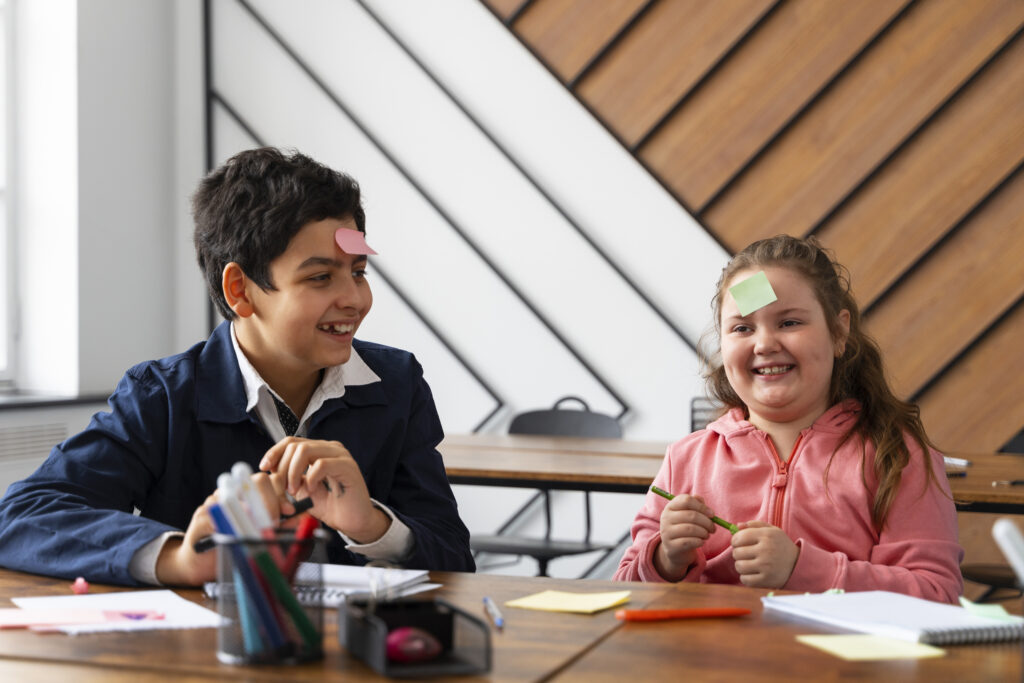
Special Needs Education and Learning Support in Bangalore: Every Child Has the Right to Learn Education is one of the most powerful tools a child can be given. It opens doors, builds confidence, and shapes the way a young person understands themselves and the world around them. For children with special needs, accessing the right kind of education, one that genuinely meets their individual needs and builds on their unique strengths, is not always straightforward. But it is always worth fighting for. Special needs education and learning support in Bangalore has grown significantly in recent years, and families today have more options, more resources, and more advocacy support than ever before. With the right educational environment and the right team behind them, children with special needs can make extraordinary academic and personal progress. At Aarumi in Bengaluru, we believe that every child has the right to learn, and we are committed to providing the structured, personalised educational support that makes that right a reality for every child we work with. What Is Special Needs Education? Special needs education, also referred to as special education or special educational needs support, refers to a range of educational approaches, adaptations, and support structures designed to meet the learning needs of children with disabilities and developmental conditions. Unlike standard classroom teaching, special needs education recognises that children with different abilities require different approaches to instruction, assessment, and support. It is not about lowering expectations. It is about finding the most effective pathway to learning for each individual child. Special needs education typically involves: Who Benefits From Special Needs Education Support? Special needs education support is beneficial for children with a wide range of conditions, including: Children do not always need a formal diagnosis to benefit from additional learning support. If a child is consistently struggling to access learning in a mainstream classroom setting, a special education assessment can provide valuable insight and direction. The Importance of Individualised Education Plans An individualised education plan, commonly referred to as an IEP, is a cornerstone of effective special needs education. It is a structured document that sets out a child’s current level of functioning, their specific learning goals, the support strategies that will be used, and the way progress will be measured and reviewed over time. A well-written IEP is built around the whole child, not just their academic performance. It takes into account their communication needs, their sensory profile, their social and emotional development, and their individual strengths and interests. It is reviewed regularly and updated as the child progresses and their needs change. At Aarumi, individualised education planning is central to our learning support approach. Every child we work with has a personalised plan that reflects who they are and where they are headed, not a generic template that could apply to any child. To learn more about our educational support programmes, visit our programmes page. Multi-Sensory Learning Approaches Children with special needs often learn most effectively through multi-sensory approaches that engage multiple channels of learning simultaneously. Rather than relying solely on verbal instruction or written text, multi-sensory teaching incorporates visual supports, hands-on activities, movement, music, and tactile materials to make learning more accessible and more memorable. For children with limited verbal communication, visual supports such as picture cards, visual schedules, and symbol-based communication tools can dramatically improve access to learning. For children who learn best through movement and physical engagement, activity-based learning approaches can unlock understanding that traditional desk-based teaching cannot reach. At Aarumi, our special educators are skilled in a wide range of multi-sensory teaching approaches, and they draw on whichever combination of methods works best for each individual child. Functional Academics: Learning That Connects to Life For many children with special needs, the most meaningful educational focus is on functional academics, academic skills that have direct relevance and application to everyday life. Functional reading might include recognising signs, labels, and simple instructions. Functional numeracy might focus on counting money, telling the time, or following a recipe. Functional academics build on a child’s existing abilities and connect learning to the real world in ways that feel purposeful and motivating. They also lay an important foundation for the life skills and vocational training that become increasingly central as a child moves through adolescence and into young adulthood. The Role of Assistive Technology Assistive technology has transformed educational access for many children with special needs in recent years. From speech-generating devices and communication apps to screen readers, adaptive keyboards, and learning software, the range of tools available to support learning has never been greater. At Aarumi, we stay current with developments in assistive technology and integrate appropriate tools into our educational support programmes where they can make a genuine difference to a child’s access and engagement. We also help families understand how to use these tools effectively at home, so that the benefits extend well beyond the classroom. Bridging School and Therapy One of the most important aspects of effective special needs education is the connection between what happens in therapy sessions and what happens in the educational setting. When therapists and educators share goals, strategies, and progress information, children benefit from a consistent, joined-up experience that reinforces learning across all environments. At Aarumi, we work closely with families and schools to build exactly this kind of connection, making sure the goals being targeted in speech therapy, occupational therapy, and behavioural support are reflected and reinforced in the educational setting as well. To learn more about how we collaborate with families and schools, visit our About page. Building a Love of Learning Beyond academic goals and therapy targets, one of the most important things special needs education can give a child is a genuine love of learning. When a child discovers that they can understand something, master a skill, or solve a problem, something lights up inside them that goes far beyond the specific thing they have learned. That spark of curiosity and the confidence that comes with genuine achievement are among the most

Here’s a new one on special needs education and learning support in Bangalore. Read More »

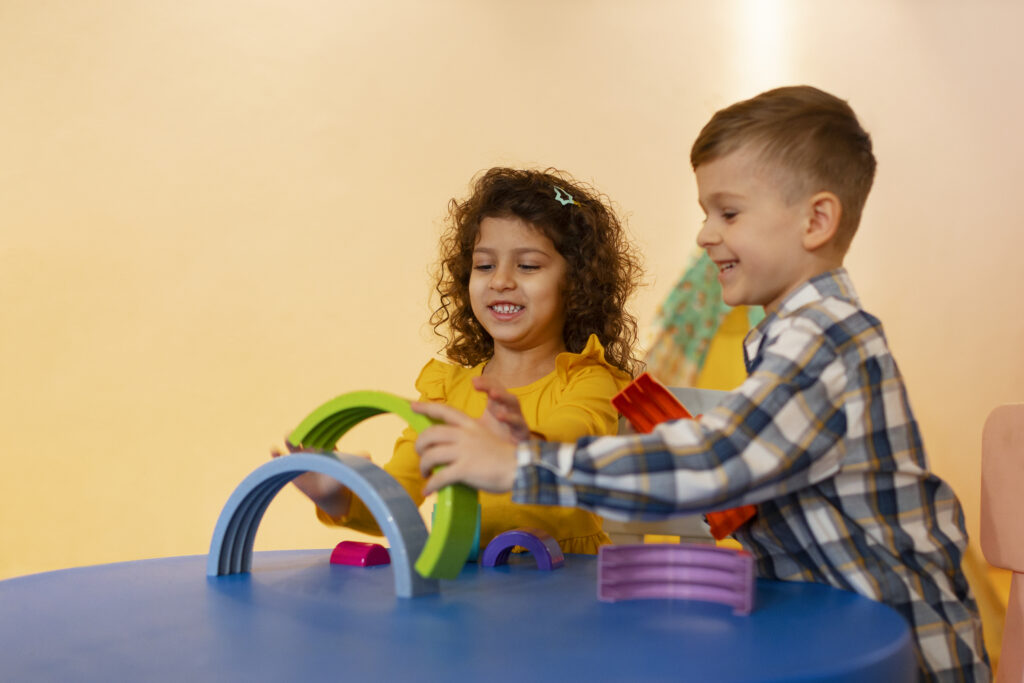
young boy girl playing indoors with eco toys

Inclusive Play and Social Skills Development for Special Needs Children in Bangalore: Learning to Connect, Play, and Belong

Play is not just something children do to pass the time. It is how they learn about the world, develop relationships, build language, and practise the social skills that will serve them throughout their entire lives. For children with special needs, play can sometimes feel more challenging than it should, and social situations that other children navigate effortlessly can require significant effort, support, and practice. Inclusive play and social skills development for special needs children in Bangalore is helping families create opportunities for their children to connect, participate, and belong in ways that feel genuine and meaningful rather than forced or frustrating. At Aarumi in Bengaluru, we believe that every child deserves the joy of play and the warmth of friendship, and we work hard to make sure every child we support has real opportunities to experience both. Why Play Matters for Children With Special Needs For typically developing children, play skills develop naturally through observation, imitation, and spontaneous interaction with peers. For children with special needs, these same skills often need to be taught deliberately, practised in structured settings, and supported over a longer period of time before they generalise into real-world social situations. This does not mean that children with special needs do not want to play or connect with others. In the vast majority of cases, they absolutely do. What they need is the right support, the right environment, and enough opportunities to practise in a way that builds confidence rather than reinforcing feelings of failure or exclusion. Play supports children with special needs to develop: What Social Skills Development Involves Social skills development is a structured approach to teaching the unwritten rules of human interaction that most people pick up instinctively but that many children with special needs find genuinely puzzling. These rules include things like making eye contact during conversation, knowing when to speak and when to listen, reading facial expressions and body language, understanding personal space, and recognising when someone is interested in what you are saying versus when they want to change the subject. For children with autism, ADHD, intellectual disabilities, and other developmental conditions, these skills are not intuitive. They need to be broken down, explained clearly, demonstrated, and practised repeatedly in a variety of contexts before they begin to feel natural. Social skills development for special needs children typically covers: Inclusive Play Environments One of the most powerful settings for social skills development is an inclusive play environment where children with and without special needs play together with appropriate support in place. When inclusion is done well, it benefits every child in the group, building empathy, patience, and social awareness in typically developing children while giving children with special needs access to natural peer models and genuine social opportunities. At Aarumi, creating genuinely inclusive play environments is something we are deeply committed to. We structure group activities carefully to give every child the best possible chance of successful, enjoyable interaction, with skilled facilitators on hand to guide, prompt, and support as needed. To learn more about our group and social skills programmes, visit our programmes page. The Difference Between Parallel Play and Connected Play Many children with special needs, particularly younger children with autism, begin their social play journey at the level of parallel play, playing alongside other children rather than with them. This is a perfectly valid and important stage of social development, and it should never be rushed or dismissed. The goal of social skills development is to support children to move gradually along the continuum from parallel play towards more connected, interactive, and reciprocal forms of play at their own pace. This progression looks different for every child, and celebrating each step forward, however small it might seem, is an essential part of keeping the journey positive and motivating. Friendships: More Than a Nice to Have For children with special needs, friendships are not a luxury. They are a vital component of emotional wellbeing, mental health, and long-term quality of life. Research consistently shows that children with strong peer relationships cope better with stress, develop greater resilience, perform better academically, and report higher levels of happiness and life satisfaction. Yet building and maintaining friendships is one of the areas where children with special needs most commonly struggle, and it is one of the areas where they most need deliberate, sustained support. At Aarumi, supporting children to build real friendships, not just surface-level social interactions, is one of our most important goals. We celebrate every connection that forms between children in our programmes, because we know how much those connections matter. Supporting Social Development at Home Social skills practised in therapy and group settings are most effective when they are also reinforced and extended at home. Families play a crucial role in creating opportunities for social practice, whether through arranging playdates, supporting participation in community activities, or simply practising conversation and social scenarios during everyday routines at home. Some practical strategies that families find helpful include: At Aarumi, we work closely with families to share strategies that extend social learning into everyday home and community life, making progress more consistent and meaningful. To learn more about how we partner with families in our work, visit our About page. Every Child Deserves to Belong Belonging is a fundamental human need. Every child, regardless of their diagnosis, their communication style, or their level of ability, deserves to feel that they are part of something, that they are seen, valued, and welcomed for exactly who they are. When a child with special needs makes a friend, shares a joke, or gets invited to join a game, something important happens. They begin to see themselves differently. Not as someone who struggles, but as someone who connects. And that shift in self-perception can change everything. If you would like to explore inclusive play and social skills support for your child, reach out to our team at Aarumi today. We would love to help your child find their place, make their friends, and discover

Inclusive Play and Social Skills Development for Special Needs Children in Bangalore: Learning to Connect, Play, and Belong Read More »

annie spratt byzkjvj5oie unsplash

Transition Planning for Special Needs Young Adults in Bangalore: Preparing for a Confident and Independent Future

The years between childhood and adulthood are significant for every young person. But for young adults with special needs and their families, this transition period brings a unique set of challenges, questions, and decisions that can feel genuinely overwhelming. What happens after school? What kind of work is possible? How much independence is realistic? Who will provide support when parents are no longer able to? Transition planning and support for special needs young adults in Bangalore is helping families navigate these questions with clarity, confidence, and a genuine sense of possibility. With the right preparation, the right support structures, and a community that believes in their potential, young adults with special needs can move into adulthood with dignity, purpose, and meaningful participation in life. At Aarumi in Bengaluru, transition planning is one of the most important areas of work we do, because we understand that the choices made during this period shape a young person’s entire adult life. What Is Transition Planning? Transition planning is the structured process of preparing a young person with special needs for the shift from childhood services and school-based support into adult life. It typically begins in early to mid adolescence and covers a broad range of areas including education, employment, independent living, community participation, and long-term support needs. Effective transition planning is always individualised. It starts with the young person themselves, their own goals, interests, strengths, and aspirations, and builds outward from there to create a realistic, structured roadmap for the years ahead. Key areas covered in transition planning typically include: Why Transition Planning Matters Without deliberate, structured planning, the transition from school to adult life can be a sudden and disorienting cliff edge for young people with special needs and their families. School provides structure, routine, social connection, and daily support. When it ends, all of that can disappear at once, leaving young adults and their families scrambling to find alternative support and direction. Early, thoughtful transition planning prevents this cliff edge by building the skills, connections, and support structures a young person needs well before they are needed. Families who begin transition planning and vocational support in Bangalore during adolescence consistently report better outcomes across employment, independence, and overall wellbeing in young adulthood. Vocational Assessment and Employment Preparation One of the most important components of transition planning is helping a young person identify their vocational strengths and interests and begin preparing for meaningful employment. This process starts with a thorough vocational assessment that explores what a young person enjoys, what they are good at, and what kinds of work environments suit their individual profile. From there, structured vocational training builds the practical skills, workplace behaviours, and social communication abilities that employment requires. This might include: At Aarumi, our vocational training programme is designed to create a genuine pathway from skill building to meaningful employment, celebrating every step forward along the way. To explore our full range of vocational and transition support programmes, visit our programmes page. Life Skills and Independent Living Alongside vocational preparation, transition planning places a strong emphasis on the life skills that allow a young person to manage their daily life as independently as possible. These skills do not develop automatically. They need to be taught deliberately, practised consistently, and reinforced across home, therapy, and community settings. Life skills targeted during transition planning typically include: The goal is always to maximise the young person’s independence and autonomy, building on what they can already do and extending it steadily over time. Community Participation and Social Connection Adult life is about more than work and daily routines. It is about belonging, contributing, and connecting with others in meaningful ways. Transition planning addresses social participation as seriously as vocational and life skills, because social isolation is one of the most significant risks for young adults with special needs after they leave school. Supporting community participation might include: At Aarumi, we actively support young people to build lives that are socially rich and community-connected, because we know that belonging is just as important as any practical skill. Supporting Families Through the Transition Period The transition to adulthood is often just as significant an adjustment for parents as it is for the young person themselves. Parents who have spent years advocating for and coordinating their child’s support suddenly face a very different landscape, with different services, different funding systems, and a different set of expectations about their role. Many parents also carry deep anxiety about the future, particularly around questions of long-term care, housing, and what will happen to their child when they are no longer able to provide daily support themselves. At Aarumi, we support families through this transition with honest, practical guidance on navigating adult services, planning for the long term, and building the support networks that will sustain their young person beyond the family home. To learn more about how we work with families, visit our About page. The Role of Self-Advocacy One of the most powerful skills a young person with special needs can develop during the transition period is self-advocacy, the ability to understand their own needs, communicate them clearly, and speak up for themselves in a range of settings. Self-advocacy skills allow young adults to participate meaningfully in decisions about their own lives, rather than having those decisions made entirely by others on their behalf. Building self-advocacy takes time and deliberate practice, but the impact on a young person’s sense of agency, dignity, and confidence is profound. At Aarumi, developing self-advocacy is a thread that runs through all of our transition support work, because we believe that every young person deserves to be the author of their own future. A Future Defined by Possibility The transition to adulthood is not an ending. It is a beginning. A beginning of a chapter where the young people we have worked with for years step into their own lives, with their own voices, their own choices, and their own contributions to make. We have seen young adults with special needs

Transition Planning for Special Needs Young Adults in Bangalore: Preparing for a Confident and Independent Future Read More »

mommy comforting distressed son indoors, holding hands in deep conversation

Anxiety and Emotional Regulation Support for Special Needs Children in Bangalore: Helping Every Child Feel Safe, Calm, and Understood

Every child feels anxious or overwhelmed sometimes. But for children with special needs, anxiety and emotional dysregulation can be a constant, exhausting presence that shapes every part of their daily experience. The school morning that ends in tears. The social situation that triggers a complete shutdown. The change in routine that leads to a meltdown that lasts for hours. These are not moments of bad behaviour or weak character. They are a child’s nervous system communicating that it is struggling to cope. Anxiety and emotional regulation support for special needs children in Bangalore is helping families understand what is driving these responses and build the strategies, skills, and environments that allow their child to feel genuinely safe, calm, and in control. At Aarumi in Bengaluru, emotional wellbeing is at the heart of everything we do, because we know that a child who feels emotionally safe is a child who can learn, connect, and grow. Understanding Anxiety in Children With Special Needs Anxiety is significantly more common in children with special needs than in the general population. Children with autism, ADHD, sensory processing disorder, intellectual disabilities, and other developmental conditions are all at elevated risk of experiencing anxiety, often because the world they navigate daily places demands on them that their nervous systems find genuinely difficult to manage. Anxiety in children with special needs can present in many different ways, including: It is important to recognise that many of these presentations can look like defiance or naughtiness to the untrained eye. Understanding the anxiety underneath the behaviour is the essential first step towards effective support. What Is Emotional Regulation? Emotional regulation refers to a person’s ability to notice, understand, and manage their emotional responses in a way that is appropriate to the situation. It involves recognising what you are feeling, understanding why you are feeling it, and choosing a response that helps rather than escalates the situation. For many children with special needs, emotional regulation is one of the most challenging skills to develop. The same neurological differences that affect communication, sensory processing, and social understanding also affect how the brain processes and manages emotional experiences. Children who struggle with emotional regulation may: Why Emotional Regulation Matters Emotional regulation underpins virtually every other area of a child’s development. A child who is in a state of emotional dysregulation cannot learn effectively, connect meaningfully with others, or make use of the skills being built in therapy. Addressing emotional regulation is therefore not a separate strand of support but a foundation that makes everything else possible. When children develop stronger emotional regulation skills, families consistently report improvements across communication, behaviour, social interaction, school participation, and overall family wellbeing. To learn more about how we address emotional regulation within our broader support programmes, visit our programmes page. Approaches to Anxiety and Emotional Regulation Support Effective support for anxiety and emotional regulation in children with special needs draws on a range of evidence-based approaches, always tailored to the individual child’s age, profile, and specific needs. At Aarumi, our approach to emotional regulation support typically includes: The Role of the Environment in Emotional Regulation A child’s ability to regulate their emotions is deeply connected to the environment they are in. Unpredictable, chaotic, or sensory-overwhelming environments make emotional regulation significantly harder. Calm, structured, predictable environments make it significantly easier. This is why creating the right environment at home and at school is just as important as any formal therapy intervention. Simple adjustments such as consistent daily routines, clear visual schedules, designated calm-down spaces, and thoughtful management of sensory triggers can make an enormous difference to how regulated a child feels throughout the day. At Aarumi, we work closely with families to develop personalised environmental strategies that complement the work being done in therapy sessions, ensuring a consistent and supportive experience across all the settings a child moves through. Supporting Parents Through Emotional Storms Living with a child who experiences frequent emotional dysregulation is exhausting, emotionally draining, and often isolating. Parents frequently describe feeling helpless in the face of their child’s distress, unsure of how to respond in a way that helps rather than escalates the situation. They may also carry their own anxiety about their child’s future and what these emotional challenges mean in the long term. At Aarumi, parent support is an integral part of our approach to emotional regulation. We help parents understand what is driving their child’s emotional responses, develop calm and consistent strategies for managing difficult moments, and build the confidence to support their child effectively even in the most challenging situations. You do not have to face these moments alone. To learn more about how we support families alongside their children, visit our About page. Building Emotional Resilience Over Time Emotional regulation is not a skill that develops overnight. It is built gradually, through hundreds of supported experiences of feeling overwhelmed and finding a way through. Every time a child manages a difficult moment with support, their brain is learning. Every time a parent responds with calm consistency rather than reactive escalation, the child’s nervous system is learning too. Over time, with the right support and enough practice, children who once seemed completely at the mercy of their emotions begin to develop genuine resilience. They start to notice their own early warning signs. They begin to use the strategies they have been taught. They recover from difficult moments more quickly. And slowly, the storms become less frequent and less intense. That progress is real, and it is possible for every child we work with. Every Child Deserves to Feel Safe At the heart of all our work at Aarumi is a simple belief: every child deserves to feel safe in their own body, in their own home, and in the world around them. When a child feels safe, everything else becomes possible. Learning happens. Friendships form. Confidence grows. And families begin to breathe a little more easily. If your child is struggling with anxiety or emotional regulation and you would like

Anxiety and Emotional Regulation Support for Special Needs Children in Bangalore: Helping Every Child Feel Safe, Calm, and Understood Read More »

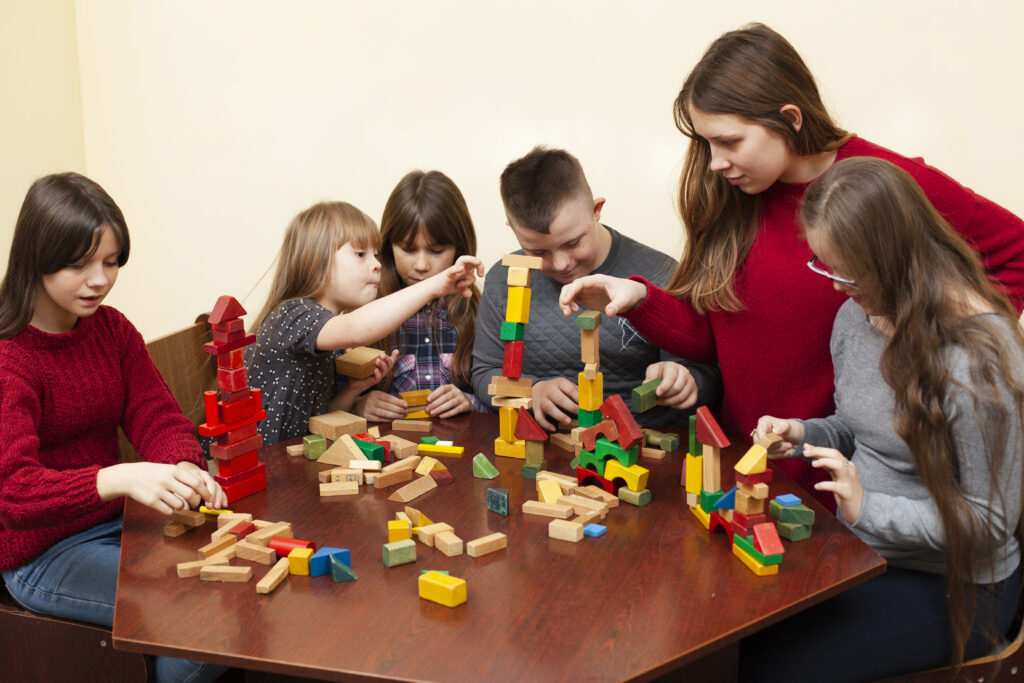
children with down syndrome playing with toys

Intellectual Disability Support and Therapy for Children in Bangalore: Building Ability, Confidence, and Independence

Every child has the capacity to learn, grow, and contribute meaningfully to the world around them. For children with intellectual disabilities, that journey may look different from what parents initially imagined, but it is no less rich, no less valuable, and no less full of possibility. Intellectual disability support and therapy for children in Bangalore is helping families across the city understand their child’s unique profile, access the right interventions, and build a future grounded in genuine ability rather than limitation. At Aarumi in Bengaluru, we work with children with intellectual disabilities and their families with deep respect for every child’s individuality, focusing always on what they can do and building carefully and consistently from there. Understanding Intellectual Disability An intellectual disability, sometimes referred to as an intellectual developmental disorder, is characterised by significant limitations in both intellectual functioning and adaptive behaviour. Intellectual functioning refers to general mental abilities such as reasoning, problem-solving, planning, abstract thinking, and learning from experience. Adaptive behaviour refers to the practical, everyday skills needed to function independently in daily life. Intellectual disability is typically identified when a child’s intellectual functioning and adaptive skills are significantly below what is expected for their age, and when these limitations are present from childhood. Intellectual disabilities range in severity from mild to profound, and each level presents its own distinct profile of strengths, challenges, and support needs. It is important to remember that an intellectual disability diagnosis does not predict a fixed ceiling of achievement. With the right support, children with intellectual disabilities consistently surpass the expectations that others place on them. Common causes of intellectual disability include: How Intellectual Disability Affects Development Children with intellectual disabilities may show delays across a range of developmental areas, including: The degree to which each of these areas is affected varies significantly from one child to the next. Many children with mild intellectual disabilities attend inclusive schools, develop meaningful friendships, and go on to live semi-independent or fully independent adult lives. Children with more significant intellectual disabilities also make meaningful progress with consistent, well-structured support across all areas of development. Why Early Intervention Makes Such a Difference As with most developmental conditions, early intervention produces the strongest outcomes for children with intellectual disabilities. Beginning structured therapy and developmental support in the early years allows children to build foundational skills during the period when the brain is most adaptable and responsive to intervention. Families who begin early intervention support in Bangalore shortly after an intellectual disability diagnosis typically find that their child develops more effectively across communication, motor, social, and daily living skills than they might have without early structured support. A Multidisciplinary Approach to Support Intellectual disability affects multiple areas of development simultaneously, which means that effective support requires a multidisciplinary approach involving a range of therapy types working in a coordinated, joined-up way. At Aarumi, our support for children with intellectual disabilities typically draws on: Special Education and Learning Support Children with intellectual disabilities learn best when teaching is structured, consistent, visual, and broken down into small, manageable steps. Special education approaches designed for children with intellectual disabilities focus on functional academics, meaning the reading, writing, and numeracy skills that have direct relevance to daily life, alongside broader life skills and social development. At Aarumi, our special education support is always tailored to the individual child, building on their specific strengths and interests while systematically addressing the areas where they need the most help. We work closely with families and schools to make sure learning goals are consistent and reinforced across all environments. To learn more about our educational support programmes, visit our programmes page. Building Communication Skills Communication is one of the most important areas of focus for children with intellectual disabilities. Many children with intellectual disabilities have stronger receptive language skills, meaning they understand more than they can express, than their expressive language might suggest. Building on this understanding and expanding a child’s ability to communicate their needs, feelings, and thoughts is central to improving quality of life and reducing frustration. For children with more significant communication challenges, augmentative and alternative communication approaches, including picture exchange systems, communication boards, and speech-generating devices, can open up entirely new possibilities for self-expression and social connection. Life Skills and the Path to Independence As children with intellectual disabilities grow older, the focus of support gradually shifts towards daily independence, life skills, and eventually vocational readiness. The practical skills of cooking, cleaning, personal hygiene, money management, using public transport, and navigating community spaces are all teachable, and they make an enormous difference to a young person’s quality of life and sense of autonomy. At Aarumi, our life skills and vocational training programmes are designed with exactly this long-term vision in mind. We work with young people to build the practical skills and the confidence they need to participate as fully as possible in adult life, including meaningful employment opportunities where appropriate. Supporting the Whole Family Raising a child with an intellectual disability is a long-term journey that affects every member of the family. Parents often carry significant emotional, practical, and financial burdens, and siblings may sometimes feel overlooked or confused about their brother or sister’s needs. At Aarumi, we take a whole-family approach to support, involving parents meaningfully in their child’s therapy, offering guidance on navigating educational and medical systems, and connecting families with peer support networks where they can share experiences with others who genuinely understand. To learn more about our values and approach to family support, visit our About page. Raising Expectations, Not Lowering Them One of the most important things we can do for children with intellectual disabilities is refuse to place a ceiling on what they might achieve. Historically, expectations for people with intellectual disabilities have been far too low, and those low expectations have become self-fulfilling prophecies. The reality is that with consistent support, genuine belief, and a community that sees their full humanity, children with intellectual disabilities regularly exceed what anyone initially thought possible. At Aarumi,

Intellectual Disability Support and Therapy for Children in Bangalore: Building Ability, Confidence, and Independence Read More »

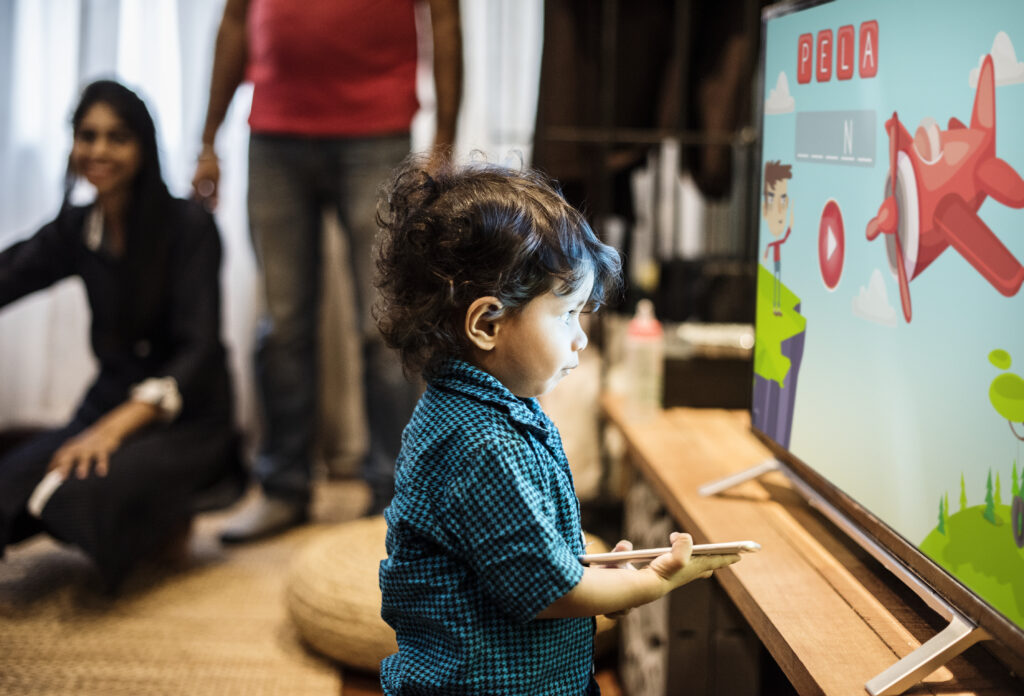
young indian boy watching television

Sensory Processing Disorder in Children: Understanding, Supporting, and Thriving in Bangalore

Have you ever watched your child cover their ears at a birthday party, melt down over the feel of a clothing tag, or refuse to walk on grass? While these reactions might seem puzzling or overly dramatic to others, for children with sensory processing disorder they are a genuine, overwhelming response to sensory input that their brain struggles to interpret correctly. Sensory processing disorder support and therapy for children in Bangalore is helping families understand what is happening beneath the surface and find practical, effective ways to help their child feel more comfortable, regulated, and confident in daily life. At Aarumi in Bengaluru, sensory processing support is woven into much of what we do, because we understand how profoundly a child’s sensory experience shapes their ability to learn, connect, and participate in the world around them. What Is Sensory Processing Disorder? Sensory processing disorder, often referred to as SPD, is a condition in which the brain has difficulty receiving, organising, and responding to sensory information from the environment. Instead of filtering and interpreting sensory input in a way that allows for a calm, appropriate response, the brain of a child with SPD may over-respond, under-respond, or respond inconsistently to the same sensory experiences. The senses involved in SPD go beyond the familiar five. They also include: SPD can affect any combination of these senses, which is why the condition presents so differently from one child to the next. How SPD Presents in Children Sensory processing differences can show up in many ways depending on whether a child is over-responsive, under-responsive, or sensory-seeking. Some common signs include: These behaviours are not wilful defiance or attention-seeking. They are a child’s nervous system communicating that it is struggling to cope with the sensory demands being placed on it. The Connection Between SPD and Other Conditions Sensory processing differences frequently co-occur alongside other developmental conditions including autism spectrum disorder, ADHD, developmental coordination disorder, and anxiety. In many cases, addressing sensory processing challenges leads to significant improvements across these other areas as well, because a child who feels more regulated and comfortable in their environment is naturally better positioned to learn, communicate, and connect with others. At Aarumi, our team takes a holistic view of every child we work with, understanding that sensory processing is rarely an isolated challenge but part of a broader picture that deserves to be understood in full. To learn more about our integrated approach, visit our programmes page. Sensory Integration Therapy The most widely used therapeutic approach for SPD is sensory integration therapy, developed originally by occupational therapist Dr Jean Ayres. Sensory integration therapy uses structured, play-based activities to help the brain learn to process and respond to sensory input more effectively over time. Sessions typically take place in a specially designed sensory room equipped with swings, climbing structures, textured surfaces, weighted equipment, and a variety of sensory tools. The therapist guides the child through activities that challenge their sensory system in a controlled, supportive way, gradually building the brain’s ability to regulate its responses. Sensory integration therapy for children typically focuses on: Creating a Sensory-Supportive Environment at Home While formal therapy is important, the home environment plays an equally significant role in supporting a child with SPD. Simple adjustments can make a meaningful difference to how regulated and comfortable a child feels throughout the day. Some practical strategies that families find helpful include: At Aarumi, parent guidance is a core part of our sensory processing support. We work closely with families to develop personalised home strategies that complement what we are doing in therapy sessions, because consistency across environments is what makes the biggest difference. SPD at School The school environment presents some of the most significant sensory challenges for children with SPD. Busy classrooms, fluorescent lighting, echoing corridors, crowded playgrounds, and the physical demands of sitting still for long periods can all push a child’s sensory system beyond its limits, leading to meltdowns, withdrawal, or significant difficulty focusing and learning. Effective school support for children with SPD often includes: At Aarumi, we work closely with families and educators to make sure the strategies being used in therapy are carried over effectively into the school environment, giving each child the best possible chance of thriving academically and socially. To learn more about our collaborative approach with families, visit our About page. Understanding Is the First Step For many families, simply understanding that their child’s reactions are neurological rather than behavioural is profoundly relieving. It shifts the conversation from “why won’t my child just cope?” to “how can we help my child’s nervous system feel safe?” and that shift in perspective changes everything. Children with SPD are not being dramatic or difficult. They are doing their absolute best to navigate a world that can feel genuinely overwhelming, and they deserve support, understanding, and a community that sees them clearly. A Calmer, More Confident Child Is Possible With the right therapy, the right environment, and a family that understands what their child needs, children with sensory processing disorder can make remarkable progress. Many children who once found everyday experiences overwhelming gradually develop greater tolerance, better self-regulation, and the confidence to engage with the world on their own terms. That progress does not happen overnight. It takes time, consistency, and patience. But it does happen, and when it does, the difference in a child’s daily experience can be truly transformative. If you are concerned about your child’s sensory processing and would like to explore support options, reach out to our team at Aarumi today. We are here to help your child feel more comfortable, confident, and capable in everything they do.

Sensory Processing Disorder in Children: Understanding, Supporting, and Thriving in Bangalore Read More »

side view family sitting table

ADHD Support and Therapy for Children in Bangalore: Helping Every Child Focus, Thrive, and Succeed

Every child is energetic, easily distracted at times, and occasionally impulsive. But for children with ADHD, these experiences are not occasional. They are constant, intense, and significantly affect how a child learns, relates to others, and experiences daily life. ADHD support and therapy for children in Bangalore is helping families understand their child’s unique needs and build the strategies, skills, and confidence that allow them to thrive both at home and at school. At Aarumi in Bengaluru, we work with children with ADHD and their families in a way that is grounded in understanding, patience, and genuine belief in every child’s potential. Understanding ADHD ADHD stands for Attention Deficit Hyperactivity Disorder. It is one of the most common neurodevelopmental conditions in childhood, affecting children across all backgrounds, genders, and levels of academic ability. ADHD is characterised by persistent patterns of inattention, hyperactivity, and impulsivity that are more frequent and severe than is typically observed in children of the same age. It is a brain-based condition, not a result of poor parenting, lack of discipline, or insufficient effort on the part of the child. ADHD presents in three main ways: It is also worth noting that ADHD often presents differently in girls than in boys. Girls with ADHD are more likely to show inattentive symptoms, which can be quieter and less disruptive, meaning they are frequently missed or misdiagnosed until later in childhood or even adolescence. How ADHD Affects Daily Life ADHD touches virtually every area of a child’s daily experience. At school, a child with ADHD may struggle to sit still, follow multi-step instructions, complete tasks, or wait their turn. At home, they may have difficulty transitioning between activities, managing their emotions, or maintaining a consistent routine. In social settings, impulsivity and emotional intensity can sometimes make friendships challenging to build and maintain. These difficulties are not a reflection of intelligence or effort. Many children with ADHD are bright, creative, and highly capable, but without the right support, their potential can go unrecognised beneath the surface of their challenges. What ADHD Support Looks Like Effective ADHD support is always multifaceted. It typically involves a combination of behavioural therapy, parent coaching, school-based strategies, and in some cases medical input. The most effective approach is one that addresses the child’s needs across all the environments they move through, not just in a single setting. At Aarumi, our ADHD support draws on a range of evidence-based approaches tailored to each child’s specific profile of strengths and challenges. To explore all the ways we support children with ADHD, visit our programmes page. Common components of ADHD support include: Behavioural Therapy for ADHD Behavioural therapy is one of the most well-evidenced approaches for supporting children with ADHD. It works by helping children understand their own behaviour patterns, develop self-regulation strategies, and build the executive function skills that ADHD affects most directly. These skills include: Behavioural therapy for ADHD is most effective when it involves parents actively, because the strategies learned in therapy need to be reinforced consistently across home and school environments. At Aarumi, parent involvement is a central part of how we approach ADHD support. Occupational Therapy and Sensory Support Many children with ADHD also have sensory processing differences that affect how they experience and respond to their environment. Loud classrooms, bright lighting, certain textures, or the physical demand of sitting still for long periods can all contribute to dysregulation and inattention. Occupational therapy addresses these sensory challenges directly, helping children develop better body awareness, improve their ability to self-regulate in sensory-rich environments, and build the fine motor skills that school tasks demand. Sensory strategies, such as movement breaks, fidget tools, and carefully structured environments, can make a significant difference to a child’s ability to focus and participate in daily activities. Supporting Children With ADHD at School School is often the most challenging environment for a child with ADHD. The demands of sitting still, listening for extended periods, managing transitions, and meeting academic expectations can all feel overwhelming without the right support in place. Effective school support for children with ADHD typically includes: At Aarumi, we work closely with families to bridge the gap between therapy and school, sharing strategies and insights that help educators support each child effectively. To learn more about our collaborative approach, visit our About page. The Strengths That Often Come With ADHD While ADHD presents real challenges, it also frequently comes alongside remarkable strengths that deserve to be recognised and celebrated. Many children with ADHD are: When these strengths are nurtured alongside the areas where support is needed, children with ADHD can channel their energy and creativity into genuinely impressive outcomes. Some of the world’s most innovative and entrepreneurial thinkers have ADHD, and the same qualities that make school challenging can become extraordinary assets in the right environment. Building Long-Term Strategies for Life ADHD does not disappear when a child grows up. For many people it continues into adolescence and adulthood, though its presentation often changes over time. This is why building genuine self-awareness, self-regulation skills, and personalised coping strategies during childhood is so important. Children who understand their own ADHD, who know what helps them focus, what environments they thrive in, and how to ask for the support they need, are far better equipped to navigate school, relationships, and eventually the workplace with confidence and success. At Aarumi, our goal is always to help every child we work with build exactly this kind of self-knowledge and resilience, alongside the practical skills they need to succeed. To explore our full range of programmes and support services, visit our programmes page. Every Child With ADHD Deserves to Be Understood Too many children with ADHD spend years being told they are lazy, naughty, or not trying hard enough, when in reality they are working harder than anyone around them just to keep up. They deserve to be understood, supported, and believed in. With the right support, the right strategies, and a team that sees the whole child rather than just

ADHD Support and Therapy for Children in Bangalore: Helping Every Child Focus, Thrive, and Succeed Read More »