
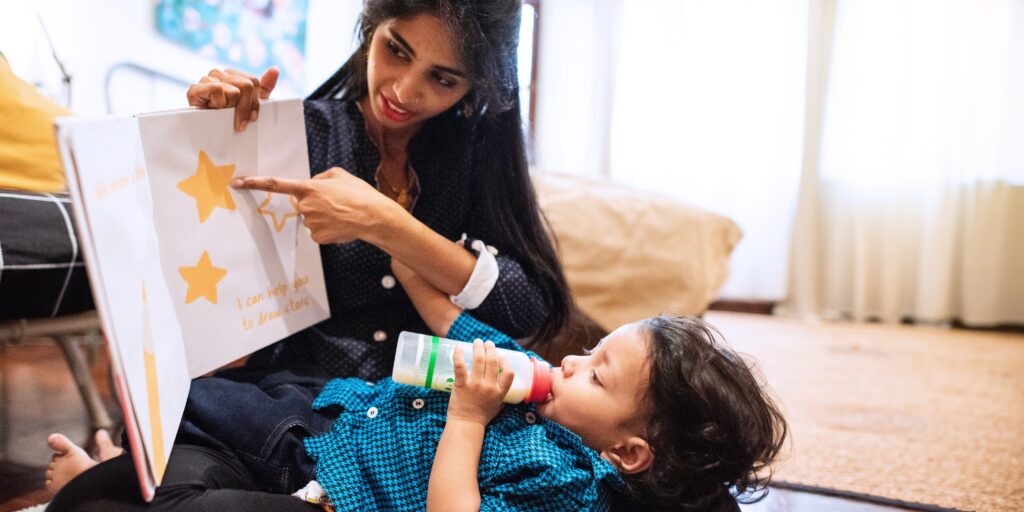
Every day is full of situations that most of us navigate without a second thought. Walking into a new place. Waiting in a queue. Joining a group activity. Dealing with an unexpected change in plans. For children with special needs, however, these everyday situations can feel genuinely bewildering, unpredictable, and anxiety-provoking. Social stories and visual supports for special needs children in Bangalore are helping families and educators give children the tools they need to understand the world around them, anticipate what is coming next, and move through daily life with greater confidence and calm.
At Aarumi in Bengaluru, social stories and visual supports are woven into much of our therapeutic and educational work, because we know that when a child understands what is happening and what is expected of them, anxiety decreases and participation increases.
What Are Social Stories?
Social stories are short, structured narratives that describe a specific social situation, event, or concept from the child’s perspective. They were developed by educator Carol Gray in 1991 and have since become one of the most widely used and well-researched tools in special needs education and therapy worldwide.
A social story typically describes:
- What the situation is and where it takes place
- Who is involved and what they might be doing or thinking
- What the child is expected to do in the situation
- Why the expected behaviour is helpful or appropriate
- How the child might feel, and how others might feel in response
Social stories are written at the child’s comprehension level and often accompanied by simple illustrations or photographs to make them more accessible and engaging. Moreover, they are always written from a positive, supportive perspective that affirms the child’s ability to manage the situation successfully.
According to The Gray Center, social stories share accurate social information in a patient and reassuring way that is easily understood by the child, helping them navigate social situations with greater understanding and confidence.
What Are Visual Supports?
Visual supports are any tools that use images, symbols, objects, or written words to communicate information visually rather than relying solely on spoken language. They are among the most universally effective tools available for supporting children with special needs across a wide range of settings and situations.
Visual supports include a broad range of tools such as:
- Visual schedules showing the sequence of daily activities
- First-then boards showing what comes next after a current activity
- Choice boards offering visual options for decisions
- Visual timers showing how long an activity will last
- Emotion charts and feelings boards for identifying and expressing feelings
- Task analysis cards breaking complex tasks into step-by-step sequences
- Visual rules and expectations displayed in classrooms or therapy rooms
- Transition warnings using visual countdowns or cue cards
- Social story books and illustrated narrative guides
Furthermore, visual supports can be created in many different formats, from simple hand-drawn pictures and photographs to professionally produced symbol systems and digital apps, depending on the child’s needs, preferences, and level of understanding.
Why Visual Supports Are So Effective
Many children with special needs are strong visual learners. They process and retain visual information more effectively than auditory information, meaning that a picture or symbol communicates far more reliably than a spoken instruction alone. Consequently, adding visual supports to verbal communication dramatically increases comprehension and reduces the anxiety that comes from not understanding what is happening or what is expected.
Visual supports are effective for children with special needs because they:
- Remain available for the child to refer back to, unlike spoken words which disappear immediately
- Reduce the cognitive demand of processing and remembering verbal information
- Provide predictability and structure that reduces anxiety and challenging behaviour
- Support independence by giving children the information they need without adult prompting
- Bridge communication gaps for children with limited verbal comprehension
- Create consistency across home, school, and therapy settings when used by all adults
Social Stories for Managing Transitions and New Situations
Transitions and new situations are among the most common triggers for anxiety and challenging behaviour in children with special needs. Moving between activities, visiting a new place, meeting new people, or dealing with a change in routine can all feel genuinely threatening to a child whose nervous system depends on predictability and sameness for a sense of safety.
Social stories address this directly by preparing the child in advance for what to expect. Instead of encountering a new situation cold and without context, the child has already read or heard a story that describes the situation, explains what will happen, and affirms that they can manage it. Consequently, the situation feels far less threatening when it arrives.
At Aarumi, we create personalised social stories for children facing specific transitions or challenging situations, whether that is starting a new school, visiting the dentist, managing a fire drill, or joining a new therapy group. To learn more about our therapeutic and educational support programmes, visit our programmes page.
Using Visual Schedules to Support Daily Routines
One of the most widely used and consistently effective visual supports is the visual schedule. A visual schedule shows a child the sequence of activities that will happen during their day, using pictures, symbols, or photographs to represent each activity in order.
Visual schedules are effective because they answer the question that many children with special needs ask constantly, either verbally or through their behaviour: what is happening next? When a child can look at their schedule and see exactly what is coming, the uncertainty that drives so much anxiety and challenging behaviour is dramatically reduced.
Moreover, visual schedules support independence. A child who can check their own schedule and move to the next activity without needing an adult to tell them what to do is developing genuine self-management skills that will serve them throughout their life.
Creating Effective Social Stories and Visual Supports
Not all social stories and visual supports are equally effective. The most useful ones share certain key qualities. First, they are written or designed at the child’s level of comprehension. Second, they use images or symbols that are meaningful and recognisable to the child. Third, they are introduced and used consistently across all settings. Furthermore, they are reviewed and updated regularly as the child’s needs and circumstances change.
At Aarumi, our therapists and educators create personalised social stories and visual supports for each child we work with, making sure these tools are practical, meaningful, and genuinely effective in supporting the child’s understanding and participation. We also provide detailed guidance to families on how to use these tools consistently at home.
Involving Families and Schools
Social stories and visual supports are most effective when they are used consistently across all the environments a child moves through. A visual schedule that is used at home but not at school, or a social story that is read at therapy but never revisited at home, will have limited impact.
Therefore, at Aarumi, we work closely with families and educators to make sure the visual supports and social stories we develop are understood, implemented, and maintained consistently across home, school, and therapy settings. To learn more about how we collaborate with families in our work, visit our About page.
Small Tools, Significant Impact
Social stories and visual supports might seem like simple tools. In some ways they are. However, their impact on a child’s daily experience can be profound. A child who previously melted down at every transition moves through their day with calm and purpose. A child who was terrified of a new experience walks in ready and prepared. A child who could not express what they were feeling points to a picture on a feelings board and is finally understood.
These moments matter enormously. They represent a child gaining access to understanding, predictability, and communication that they could not access before. Furthermore, they represent a family experiencing mealtimes, mornings, and school transitions with significantly less stress and conflict.
If you would like to explore social stories and visual support strategies for your child in Bangalore, reach out to our team at Aarumi today. We are here to help your child understand their world more clearly, navigate it more confidently, and experience it with greater joy and ease.