
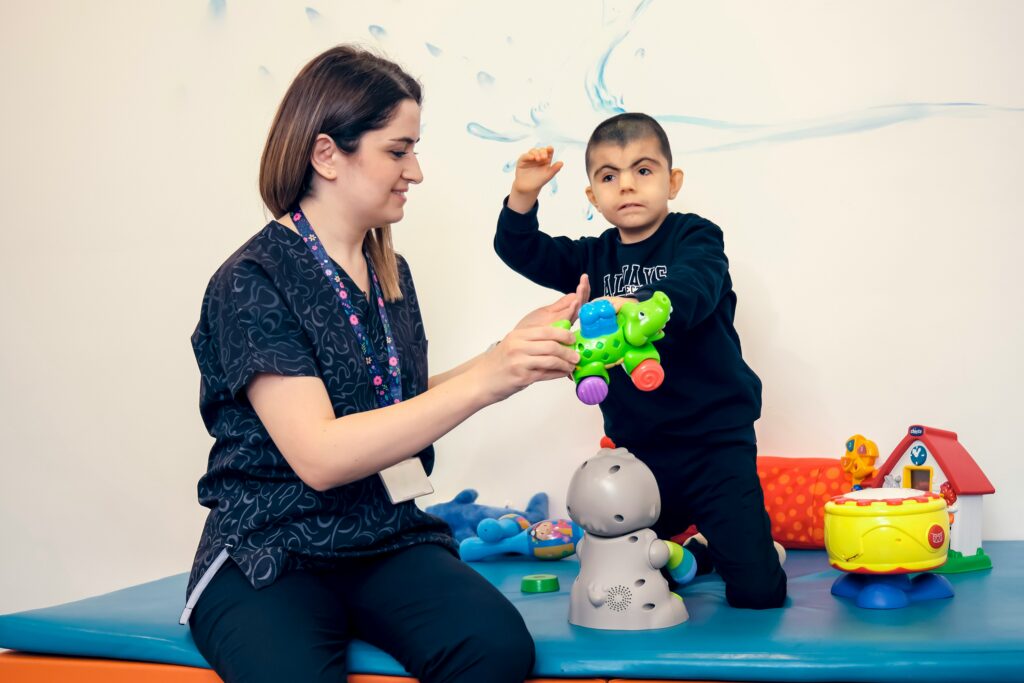
Play is the most natural thing in the world for a child. It is how they make sense of experiences, process emotions, and connect with others. However, for children with special needs, play can sometimes feel blocked or out of reach. Play therapy for special needs children in Bangalore helps families unlock the healing potential of play in a structured, therapeutic context. As a result, children gain a safe space to express themselves and grow in ways that traditional approaches sometimes cannot reach.
At Aarumi in Bengaluru, play is a serious therapeutic tool. Furthermore, we see it every day as a genuine pathway to healing, learning, and development for every child we work with.
What Is Play Therapy?
Play therapy is a structured approach to supporting children’s emotional, social, and developmental wellbeing through play. Rather than asking a child to talk about their feelings, the therapist uses play as the child’s natural language. In addition, this approach works particularly well for children who find verbal communication challenging.
According to the Association for Play Therapy, play therapy is a well-established, evidence-based approach that uses play to help children prevent or resolve psychosocial challenges and achieve optimal growth and development.
Play therapy falls into two main types:
- Non-directive play therapy — the child leads entirely, and the therapist follows without directing
- Directive play therapy — the therapist introduces specific activities to guide the play towards clear goals
For most children with special needs, a combination of both approaches works best. Moreover, the balance between them shifts as the child progresses through therapy.
Why Play Therapy Works So Well for Children With Special Needs
Many children with special needs find talk-based therapy genuinely difficult. They may have limited verbal skills, struggle to reflect on their emotions, or feel anxious in structured adult-directed settings. Play therapy sidesteps these barriers entirely.
Instead of requiring sophisticated language, play therapy simply invites the child to play. Then the therapist uses that play as the vehicle for therapeutic work. Consequently, children engage more naturally and make progress that other approaches sometimes cannot reach.
Play therapy benefits children with special needs in several important ways. First, it meets children at their current developmental level. Second, it reduces the anxiety that structured approaches often trigger. Third, it builds the therapeutic relationship through shared enjoyment and genuine connection. Finally, it supports emotional regulation through safe, boundaried play experiences.
What Play Therapy Can Address
Play therapy addresses a wide range of emotional, behavioural, and developmental challenges. These include:
- Anxiety and fear responses
- Trauma and difficult early experiences
- Grief and loss
- Attachment difficulties
- Low self-esteem and negative self-perception
- Aggressive or challenging behaviour
- Social withdrawal and isolation
- Emotional dysregulation and frequent meltdowns
- Adjustment difficulties following diagnosis or transition
- Processing the experience of being different from peers
To learn more about how play therapy fits within our broader programmes, visit our programmes page.
What Happens Inside a Play Therapy Session?
A play therapy room is a carefully designed space filled with materials chosen to support different kinds of therapeutic play. These typically include:
- Art and craft materials for creative expression
- Sand trays for sensory and symbolic play
- Puppets, dolls, and figures for narrative play
- Building and construction materials
- Sensory play items including water, sand, and tactile materials
- Musical instruments for expressive play
- Books and social stories for narrative exploration
- Games for structured social play
The therapist creates a consistent, predictable environment throughout every session. As a result, the child knows they are safe and that nothing they express will be judged. This sense of safety forms the foundation on which all therapeutic progress is built.
Sessions are held weekly at the same time and in the same space. Predictability and routine are especially important for children with special needs, so consistency matters enormously here.
The Therapeutic Relationship
At the heart of play therapy sits the relationship between child and therapist. Through this relationship, built on trust and consistent warmth, healing and growth become possible.
Many children with special needs have experienced repeated frustration or misunderstanding in their interactions with the world. Therefore, the experience of being truly seen and accepted by a therapist can be profoundly healing in itself. Moreover, this sense of acceptance often transfers into greater confidence in other relationships over time.
At Aarumi, our therapists bring both clinical expertise and genuine human warmth to every session. We believe the quality of the relationship matters just as much as the quality of the technique.
How Parents Are Involved
Parents play an important role in supporting the therapeutic process. Regular parent consultations allow therapists to share observations, discuss progress, and offer practical home guidance. In some cases, therapists also introduce parents to child-led play approaches they can use at home.
During these parent-led play sessions, the parent follows the child’s lead and focuses on connection and enjoyment rather than teaching or directing. Consequently, the therapeutic benefits extend far beyond the clinic setting. To learn more about how we involve families in our work, visit our About page.
Play Therapy as Part of a Broader Support Plan
Play therapy works best as part of an integrated support plan. For children with special needs, this typically means play therapy sitting alongside speech therapy, occupational therapy, behavioural support, and special education. Furthermore, all members of the team share information and align their approaches so the child receives consistent support across every setting.
At Aarumi, our multidisciplinary approach ensures play therapy never operates in isolation. Instead, it forms one important part of a joined-up programme that addresses the whole child across all dimensions of their development. To explore our full range of support, visit our programmes page.
The Healing Power of Play
Something remarkable happens when a child receives a safe space, a trusted adult, and the freedom to play. Barriers come down. Defences soften. Things that could not be said begin to emerge through the movement of figures in a sand tray, the strokes of a paintbrush, or the story told through a puppet.
Play therapy reminds us that children always try to communicate. They always try to make sense of their world. Moreover, they always move towards growth when the conditions are right. Our job as therapists, parents, and community is simply to create those conditions and trust the child’s natural capacity to heal and flourish.
If you would like to explore play therapy for your child in Bangalore, reach out to our team at Aarumi today. We would love to help your child find their space to play, express, and grow.