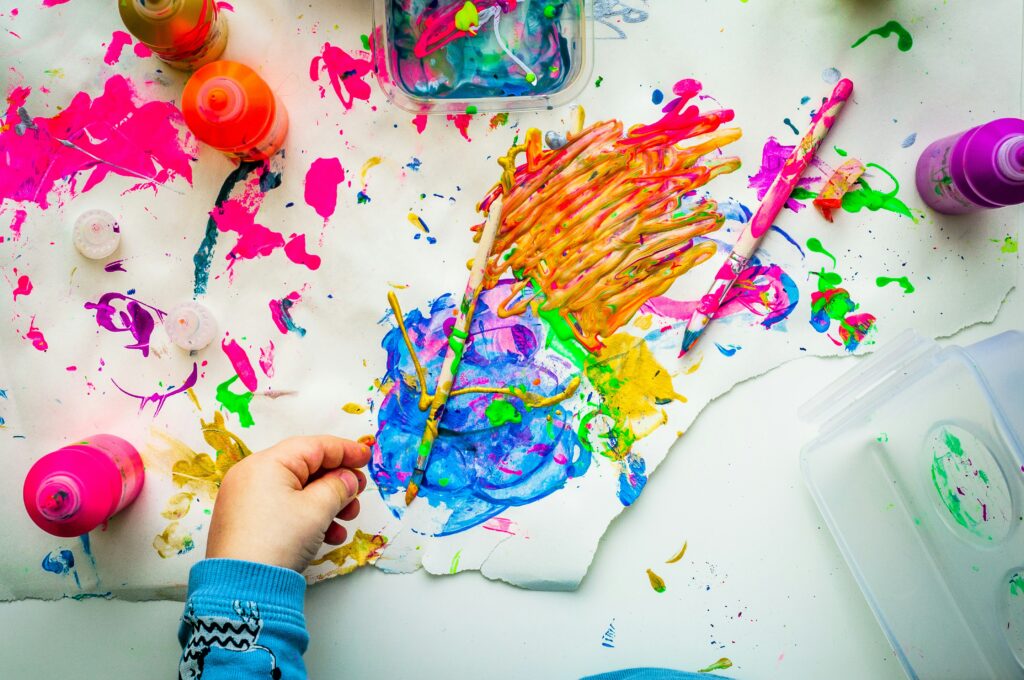
Some of the most powerful moments of communication happen without a single word. A child who cannot yet say how they feel picks up a paintbrush and tells you everything. A young person who struggles to connect with others sits beside a therapist and loses themselves in a shared creative process. These moments are at the heart of art therapy, and they happen every day with children who have found that creativity gives them something that words alone cannot.
Art therapy for special needs children in Bangalore is helping families discover what becomes possible when a child is given the space, the materials, and the skilled support to express themselves creatively. The results go far beyond what ends up on the page or the canvas. They show up in greater confidence, calmer behaviour, stronger communication, and a growing sense of self that changes how a child moves through the world.
At Aarumi in Bengaluru, art therapy is a valued part of our therapeutic offering, because we know that creative expression is not a luxury for children with special needs. It is a necessity.
What Is Art Therapy?
Art therapy is a structured, evidence-based form of therapy that uses creative art-making as the primary means of communication and therapeutic exploration. Importantly, art therapy is not art class. A child does not need any artistic skill or talent to benefit from it. Furthermore, the finished artwork is never the point. Instead, the process of creating is what matters, and what the therapist observes and works with throughout.
According to the British Association of Art Therapists, art therapy uses art media as the primary means of communication within the therapeutic relationship, providing a safe space for people to explore difficult feelings, develop self-awareness, and achieve personal growth.
A trained art therapist designs sessions using a range of creative materials and processes including:
- Drawing and sketching
- Painting with different media
- Collage and mixed media work
- Clay and three-dimensional modelling
- Printmaking and stamp activities
- Sensory art using textures and tactile materials
- Sand art and nature-based creative activities
- Photography and digital creative tools where appropriate
Why Art Therapy Is Particularly Valuable for Children With Special Needs
Many children with special needs find verbal communication genuinely difficult. They may lack the words to describe their inner experiences, struggle to organise their thoughts into spoken language, or feel too anxious to express themselves directly. Art therapy sidesteps all of these barriers.
Instead of requiring words, art therapy invites the child to create. Then the therapist works with what emerges from that creative process. Consequently, children who have never been able to express how they feel verbally can communicate profound things through colour, shape, texture, and image.
Art therapy is particularly valuable for children with special needs because it:
- Offers a non-verbal channel for emotional expression and communication
- Reduces the pressure and anxiety of direct verbal interaction
- Provides concrete, tangible experiences for children who think visually
- Builds fine motor skills through the physical act of art-making
- Develops focus, attention, and task persistence in an engaging context
- Supports sensory processing through the exploration of different materials
- Builds self-esteem through the experience of successful creative expression
- Creates a physical record of progress and growth over time
What Art Therapy Can Address
Art therapy supports a wide range of emotional, developmental, and behavioural goals. These include:
- Emotional expression and processing for children with limited verbal communication
- Anxiety and stress reduction through focused creative activity
- Trauma processing in a safe, indirect therapeutic context
- Building self-esteem and positive self-perception
- Developing focus, persistence, and task completion skills
- Sensory exploration and integration through tactile art materials
- Social skills through collaborative art-making activities
- Emotional regulation through the calming, rhythmic nature of creative processes
- Identity development and self-awareness through creative self-expression
To learn more about how art therapy fits within our broader therapeutic programmes, visit our programmes page.
Art Therapy and Emotional Expression
One of the most powerful aspects of art therapy is the way it allows children to express emotions that they cannot access or communicate verbally. Anger, grief, fear, confusion, joy, and love can all find expression through colour, image, and form in ways that feel safe and manageable.
Moreover, the art-making process itself is often regulating. The repetitive motion of drawing or painting, the sensory experience of working with clay or collage materials, and the focused attention that creative work demands all have a naturally calming effect on the nervous system. Consequently, many children arrive at art therapy sessions in a state of dysregulation and leave feeling noticeably calmer and more settled.
At Aarumi, our art therapists pay close attention to each child’s creative process throughout every session. They notice what materials the child is drawn to, how they use them, what images and themes emerge, and how these connect to the child’s broader emotional and developmental life.
Art Therapy and Sensory Processing
Art therapy and sensory processing support are naturally well-aligned. Many children with special needs have significant sensory processing differences that affect how they experience touch, texture, pressure, and visual input. Art-making provides a structured, purposeful context for sensory exploration that is therapeutically rich and inherently motivating.
Working with clay provides deep proprioceptive input. Finger painting offers tactile stimulation. Collage-making involves the exploration of different textures and surfaces. Furthermore, each of these experiences can be carefully calibrated by the therapist to provide exactly the kind and degree of sensory input that each individual child needs.
At Aarumi, we integrate sensory processing awareness into our art therapy approach, making sure the materials and activities chosen for each session genuinely support each child’s sensory regulation needs alongside their broader therapeutic goals.
What an Art Therapy Session Looks Like
Art therapy sessions are structured but responsive, always following the child’s lead within a clear therapeutic framework. The therapist creates a consistent, welcoming environment where materials are predictably available and the child knows what to expect.
A typical session might include:
- A brief settling activity to help the child transition into the therapeutic space
- Free exploration of available materials with therapist observation and gentle facilitation
- A structured creative activity targeting specific therapeutic goals
- A period of reflection on the creative work, adapted to the child’s communication level
- A consistent closing routine to support transition out of the session
Throughout every session, the therapist tracks what emerges in the child’s creative work. Subsequently, they use these observations to inform goal-setting, progress review, and communication with families and the broader therapeutic team.
Involving Families in Art Therapy
Parents and caregivers play an important role in supporting the benefits of art therapy beyond the session itself. Simple creative activities at home, such as drawing together, exploring different art materials, or simply providing a regular space for free creative expression, all reinforce the therapeutic work happening in sessions.
At Aarumi, we share observations and practical suggestions with families regularly so that creative expression becomes a valued and supported part of daily home life rather than something that happens only in the therapy room. To learn more about how we involve and support families in our work, visit our About page.
Art Therapy as Part of an Integrated Support Plan
Art therapy is most effective when it operates as part of a broader, joined-up therapeutic support plan. For children with special needs, this means art therapy working alongside speech and language therapy, occupational therapy, behavioural support, and special education.
At Aarumi, our multidisciplinary team shares information and aligns goals across all areas of support. Therefore, the insights that emerge from art therapy sessions inform and enrich the work being done across the child’s entire support programme. To explore our full range of therapeutic and developmental programmes, visit our programmes page.
The Transformative Power of Creative Expression
There is something deeply moving about watching a child with special needs discover that they can create something. That the marks they make on a page matter. That the colours they choose mean something. That the image they have made is worth looking at, worth talking about, worth keeping.
Art therapy reminds us that every child has an inner world that is rich, complex, and worthy of expression. Every child has something to say. Moreover, every child deserves a space where saying it feels safe, meaningful, and celebrated.
When a child finds that creative expression gives them a voice, something shifts inside them. They begin to see themselves differently. Not as someone who struggles, but as someone who creates. And that shift in self-perception, quiet and gradual as it often is, can change the entire trajectory of a child’s development and wellbeing.
If you would like to explore art therapy for your child in Bangalore, reach out to our team at Aarumi today. We would love to help your child discover what they are capable of expressing, creating, and becoming.