
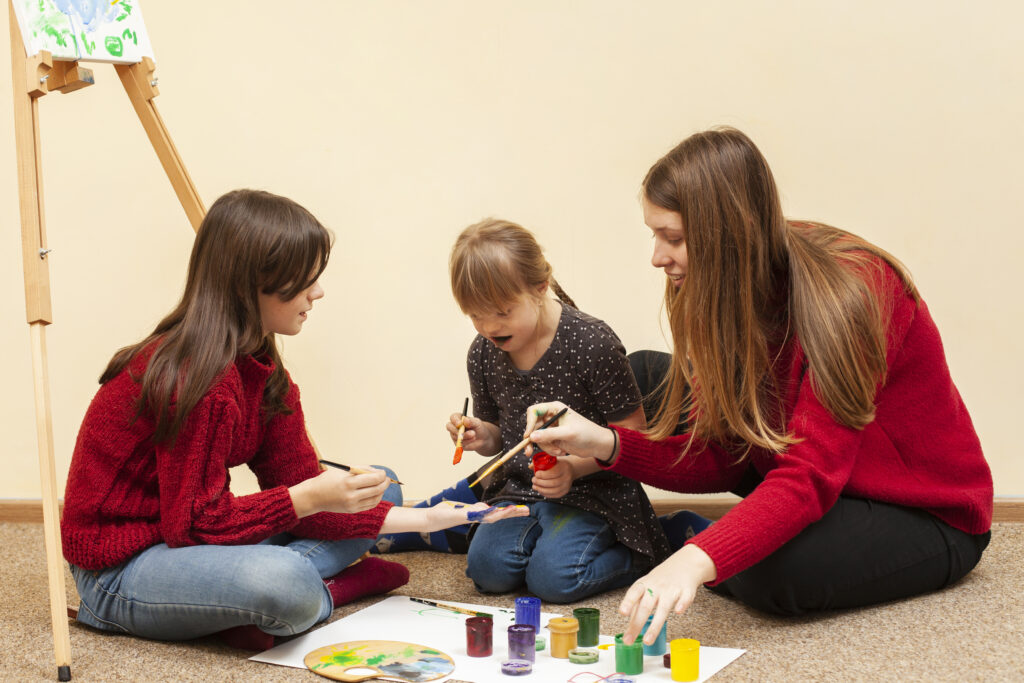
Individual therapy plays a vital role in a child’s development, but it only tells part of the story. Real life happens in groups. At school, at birthday parties, in the playground, and within families, children are constantly navigating shared spaces with others. Group therapy for special needs children in Bangalore is helping kids practise exactly these skills, building the confidence to interact, share, and connect with peers in a safe, guided setting.
At Aarumi in Bengaluru, group sessions are an important part of our approach, because we know that social skills are best learned not in isolation, but in the company of other children.
What Is Group Therapy?
Group therapy brings together a small number of children, often with similar developmental needs or age groups, to work on shared goals in a structured, supportive environment. Unlike one-on-one therapy, group sessions give children the chance to practise skills in real time with peers, under the guidance of a trained therapist.
Group therapy can take many forms depending on the goals of the children involved, including:
- Social skills groups
- Peer play groups
- Group speech and language sessions
- Sensory and movement-based group activities
- Group occupational therapy sessions focused on shared tasks
- Life skills and pre-vocational groups for older children
Why Group Settings Matter
Many of the skills children need most in daily life, such as turn-taking, sharing, reading social cues, managing frustration around others, and building friendships, are very difficult to practise in a one-on-one setting. Group therapy creates a space where children can try these skills out, make mistakes, and learn in real time with support close at hand.
Children who participate in group therapy programmes in Bangalore often show improvements in:
- Turn-taking and sharing
- Initiating and responding to peer interactions
- Following group instructions and routines
- Tolerating proximity to other children
- Managing frustration and emotional regulation in social settings
- Building early friendships and social confidence
How Group Therapy Sessions Work
Group therapy sessions are carefully structured to balance individual support with shared activities. Therapists typically group children based on similar developmental levels, social goals, or age ranges, so that the group dynamic genuinely supports each child’s growth.
A typical group session might include:
- A structured warm-up or greeting routine
- Cooperative games and shared activities
- Turn-based tasks that encourage patience and sharing
- Group discussions or social stories, depending on age and ability
- Free play time with therapist guidance and support
- A consistent closing routine to mark the end of the session
Therapists actively guide interactions throughout, stepping in to model appropriate responses, prompt communication, and help children navigate moments of conflict or difficulty as they arise.
Group Therapy and Long-Term Social Confidence
The benefits of group therapy often extend well beyond the session itself. Skills practised in a group setting tend to generalise more naturally to real-world environments like school, family gatherings, and community activities, simply because the group setting mirrors real social situations more closely than individual therapy can.
Over time, many children who participate consistently in group sessions show greater ease in unfamiliar social settings, more willingness to approach peers, and a stronger sense of belonging within their community. This kind of social confidence often becomes a meaningful foundation for the vocational and life skills training many children pursue as they grow older.
Building Friendships, Not Just Skills
While group therapy is built around specific developmental goals, something equally valuable often happens alongside the structured work: genuine friendships begin to form. Children who attend group sessions regularly often look forward to seeing their peers, and these relationships can become an important source of comfort, familiarity, and joy.
At Aarumi, we have seen how meaningful these peer connections can be, not just for skill development but for a child’s overall sense of happiness and belonging. To learn more about how we build community within our programmes, visit our About page.
A Space Where Every Child Is Welcome
Group therapy works best in an environment where every child feels genuinely accepted, regardless of how they communicate, move, or interact. Creating that sense of safety and acceptance is something we prioritise deeply at Aarumi, because children learn and grow best when they feel they truly belong.
If you would like to explore group therapy options for your child, reach out to our team at Aarumi today. We would be glad to help your child find their place within a group that supports and celebrates who they are.