
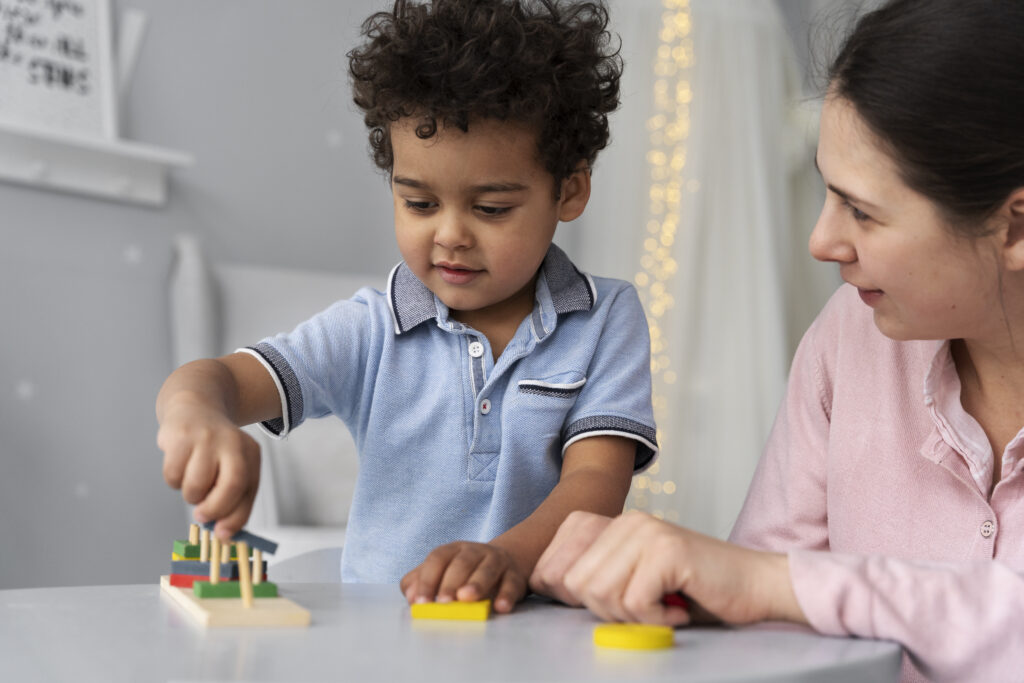
When a child is diagnosed with a developmental delay or disability, the road ahead can feel uncertain for any parent. But one truth stands out clearly across research and real-world experience: starting support early changes everything. Early intervention therapy in Bangalore is helping thousands of families give their children the strongest possible start, and the difference it makes often lasts a lifetime.
At Aarumi in Bengaluru, we work closely with parents during this critical window, because we have seen firsthand how much progress a child can make when support begins at the right time.
What Is Early Intervention Therapy?
Early intervention refers to therapeutic and developmental support provided to children, typically between birth and six years of age, who show signs of developmental delay or disability. This includes children with autism spectrum disorder, cerebral palsy, Down syndrome, speech and language delays, and other developmental conditions.
The first few years of life are when a child’s brain is most adaptable. During this period, the brain forms new neural connections at a remarkable pace, which means therapy and structured support can have a far greater impact than the same support given later in childhood.
Early intervention typically includes:
- Speech and language therapy
- Occupational therapy
- Physiotherapy
- Behavioural therapy
- Sensory integration support
- Parent training and family guidance
Why Timing Makes Such a Big Difference
Many parents wonder if waiting a little longer to “see how things go” is the safer choice. In most cases, it is not. The earlier a delay is identified and addressed, the more effectively a child’s brain can build new pathways around the difficulty.
Children who receive early intervention therapy in Bangalore are more likely to:
- Develop stronger communication skills
- Reach physical and motor milestones sooner
- Build better social and emotional regulation
- Need less intensive support as they grow older
- Transition more smoothly into mainstream or inclusive schools
This does not mean older children cannot benefit from therapy. They absolutely can. But the early years offer a window where progress tends to happen faster and more naturally.
Spotting the Early Signs
Parents are often the first to notice something feels different about their child’s development, even before a formal diagnosis. Some early signs worth discussing with a paediatrician or specialist include:
- Limited or no eye contact
- Delayed speech or babbling
- Not responding to their name by 12 months
- Difficulty with simple gestures like pointing or waving
- Unusual sensitivity to sound, light, or touch
- Repetitive movements or behaviours
Noticing these signs does not mean something is definitely wrong. It simply means it is worth getting a professional opinion sooner rather than later.
Why Bangalore Families Are Prioritising Early Support
Bangalore has grown into one of India’s most active cities for early intervention and developmental therapy, with a wide network of specialists, paediatric centres, and inclusive schools. This has made it easier for families across Hennur, Kalyan Nagar, HBR Layout, Banaswadi, and other parts of the city to access timely, professional support without long waitlists or having to travel far.
At Aarumi, our approach is built around the child first. Every therapy plan is shaped by the child’s specific needs, strengths, and pace of development, rather than a one-size-fits-all programme. To learn more about how we work with families, visit our About page. We also work closely with parents, because progress at home matters just as much as progress in a therapy room.
A Foundation for the Years Ahead
Early intervention is not about rushing a child or forcing milestones. It is about giving them the right support at the right time, so they can grow into confident, capable individuals. The skills built during these early years often become the foundation for everything that follows, including school readiness, communication, and eventually the kind of vocational training and independence many families look toward later on.
If you have noticed early signs of developmental delay in your child, reaching out sooner rather than later can make a meaningful difference. Speaking with a specialist early is one of the most valuable steps a parent can take. Get in touch with our team to discuss the right support for your child.